Your First Tennis Match on Television: Follow the Serve
Follow the serve in a tennis match on television by reading its target, the receiver’s position and the first reply, so the opening of each point makes sense.

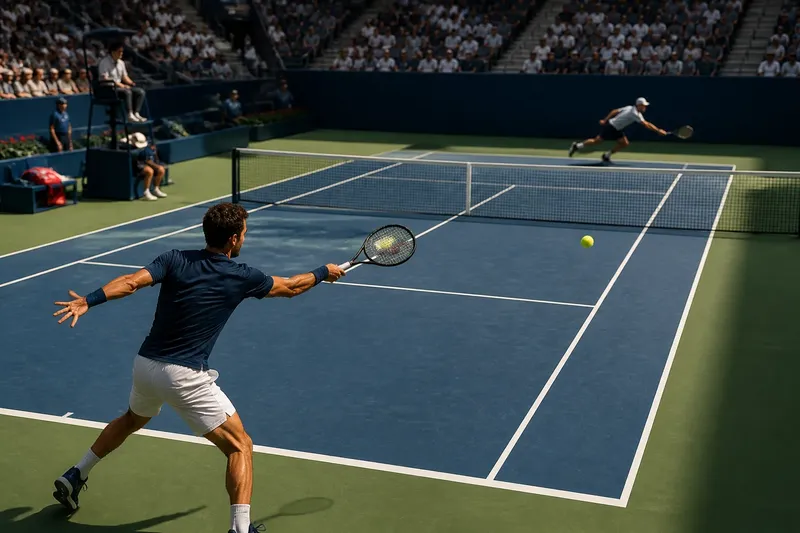
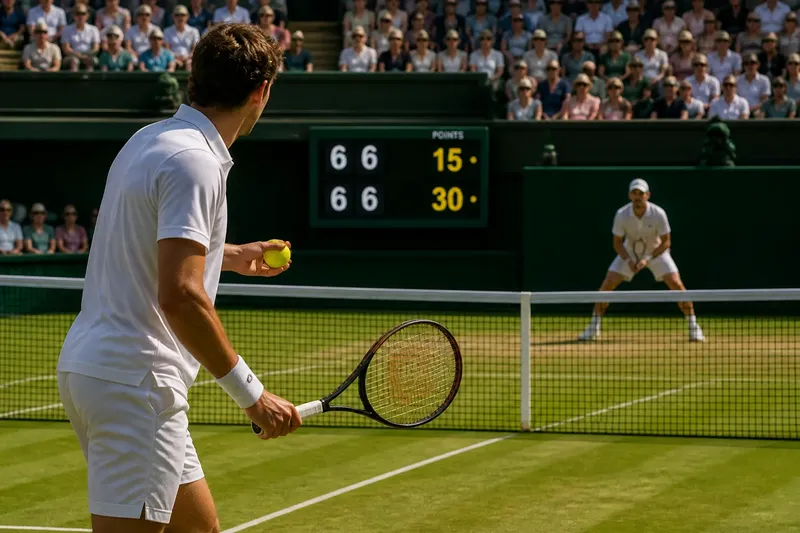
The receiver shifts towards the sideline as the server tosses the ball, and the camera cuts just before contact. To follow the serve in a tennis match on television, watch where the server aims, how the receiver meets it and what the first reply allows. Those clues explain the opening of a point without requiring a map of every movement that follows.
Read the serve
The serving side changes after each point: even scores are served from the right-hand half of the baseline, odd scores from the left. The score graphic can tell you which half is in use if the camera angle makes it unclear. The receiver’s position is worth noticing too, but it is a clue rather than a promise of what the player intends.
At contact, look for the serve’s direction. It can travel towards the receiver’s body, towards the centre line, or wide towards the singles sideline. A serve aimed at the body can jam the receiver; one directed wide can draw them away from the centre. Pace matters, but placement often explains why a return looks rushed or arrives with room to swing.
The first serve is the player’s initial attempt. If it misses the service box, the server has a second attempt; a second fault, called a double fault, awards the point to the receiver. The umpire’s call and the scoreboard help distinguish a fault from a ball that remains in play.
Watch the return
The return is the receiver’s first shot after the serve. It may be a compact block against pace, a full swing, or a slice that keeps the ball low. The receiver need not attack at once: a deep return can make the server play from farther back, while a short one may give the server room to move forward.
Notice where the receiver stands before the serve, then compare that position with the first movement after contact. A player close to the baseline may be trying to meet the ball early; someone farther back has more space to react, but may have to cover more ground to reach the bounce. Neither position proves a plan. The return itself offers better evidence.
After the serve, keep your attention on the receiver until the ball leaves the racket, then shift to the server. It is like watching a door swing: the first movement tells you less than the space it opens or closes.
When the camera cuts?
How can I tell if a serve was a fault?
Listen for the umpire’s call and check whether the scoreboard marks a second serve. If play has stopped after a first attempt, the server is preparing the second; if the point continues, the ball was in play.
Why does the receiver stand far back?
A deeper position leaves more room to react to a fast serve, though it can make the receiver travel farther to meet the bounce. Watch whether the player steps forward to take the ball early or stays back and returns it after it has risen.
What does a short return mean?
A short return can give the server a chance to approach the net or strike from inside the baseline. The immediate clue is the server’s first response: moving forward suggests the ball has invited an attack, while staying back means the next shot may still be played from the baseline.
Which camera angle helps most?
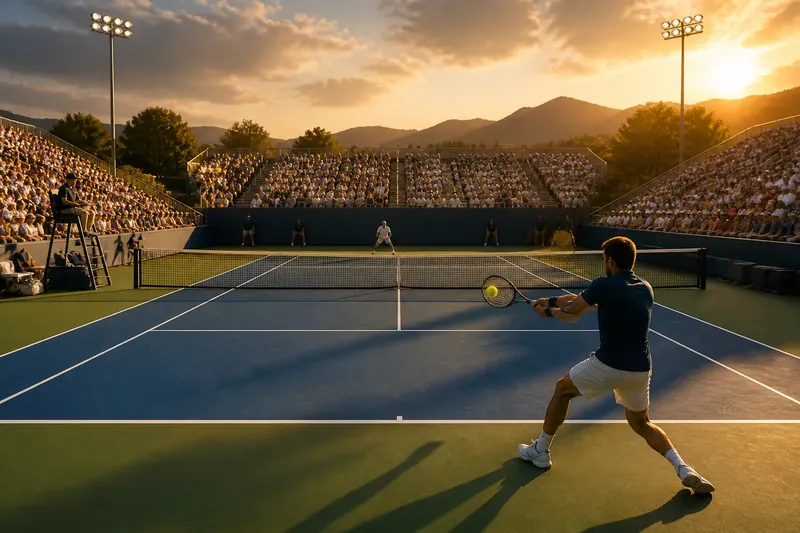
A view from behind the server makes the serve’s direction easier to judge; a side view can show the receiver’s movement more clearly. Treat each angle as one clue, since a broadcast cut is not a permanent overhead diagram.
Recover the sequence
If the ball disappears during the toss or a camera change, do not reconstruct its path from a player’s reaction. Check the umpire’s call and score graphic, then notice whether both players reset or continue moving. A reset usually means the point has ended; continued movement means the exchange is live.
Say you switch on just as the receiver stretches wide and sends the ball back. The score graphic indicates a second serve, and the server moves towards the middle of the baseline. You can tell the first attempt missed, but not where it went. Watch whether the server meets the return comfortably or has to move to reach it; that gives you a useful account of the point’s opening without inventing the unseen serve.
Use a viewing routine
For the next game, check these cues in order. Each one helps decide what to watch next rather than asking you to predict the point.
- Observe which half of the baseline the server uses; if the score confirms the side, follow the toss from that position, and if the view obscures it, use the score graphic instead.
- Observe whether the serve goes towards the body, centre or sideline; if the receiver is drawn aside, watch the space left behind, and if the ball stays central, watch for a jammed or rushed return.
- Observe whether the scoreboard shows a first or second serve; if it shows a second, expect the server’s next attempt, and if the umpire calls a double fault, recognise that the point is over.
- Observe the receiver’s position before contact; if the player steps in, watch for an early return, and if the player stays deep, watch how much ground the bounce requires them to cover.
- Observe whether the return is a block, drive or slice; if it lands deep, follow the server’s response from farther back, and if it lands short, watch whether the server moves forward.
- Observe whether the camera cuts before the ball’s path is clear; if it does, use the umpire’s call and score graphic, and if neither resolves the gap, leave the exact direction unknown and begin again with the next serve.
To follow the serve in a tennis match on television, you need the target, the receiver’s response and the server’s next decision. If a broadcast hides one detail, the score and umpire can settle some questions; the rest can remain uncertain. A point is easier to read when you distinguish what the camera shows from what it merely invites you to guess.